
How it is built
A hood panel has to survive what the hood survives: vibration, gravel, pressure washing and sun. Cascadia solved that with three things — the cell layout, the fastener and the tether.
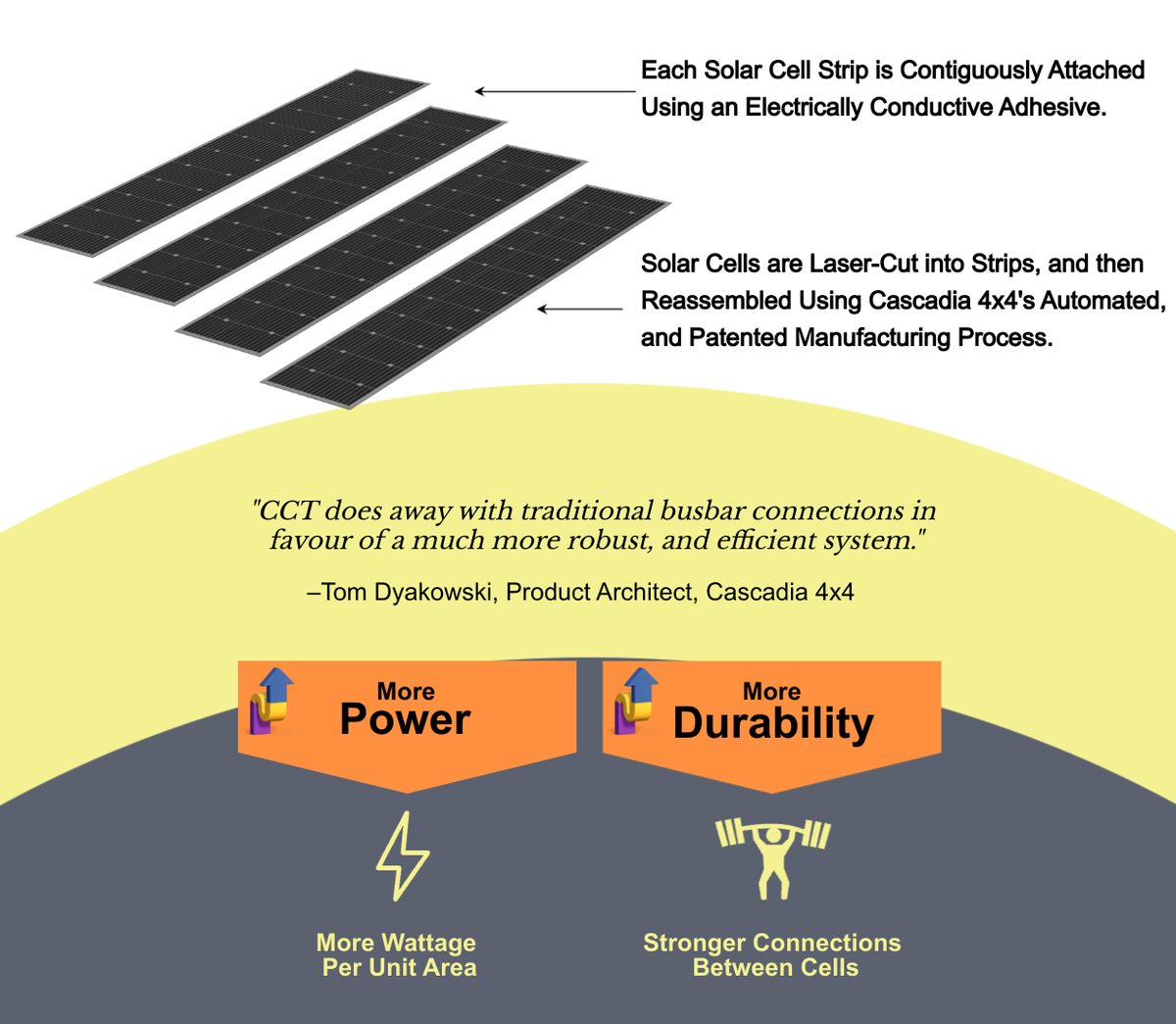
Contiguous Cell™ — less gap between cells
In a conventional panel the cells are joined by ribbons running across the front. Here the cells sit against one another, so more of them fit in the same area and the gaps between them are smaller.
Flexible laminate
The panel bends with the pressings of the hood. There is no rigid frame to bolt down.
German-made cells
The manufacturer states German cell origin; the systems are assembled in Canada.
Certification
IEC 61215, IEC 61730, CE and RoHS. The manufacturing plant works to ISO 9001.
We do not state the dimensions of the panel itself — the datasheets give shipping package dimensions, which is not the same thing. If you need the exact outline, ask and we will request it from the manufacturer.
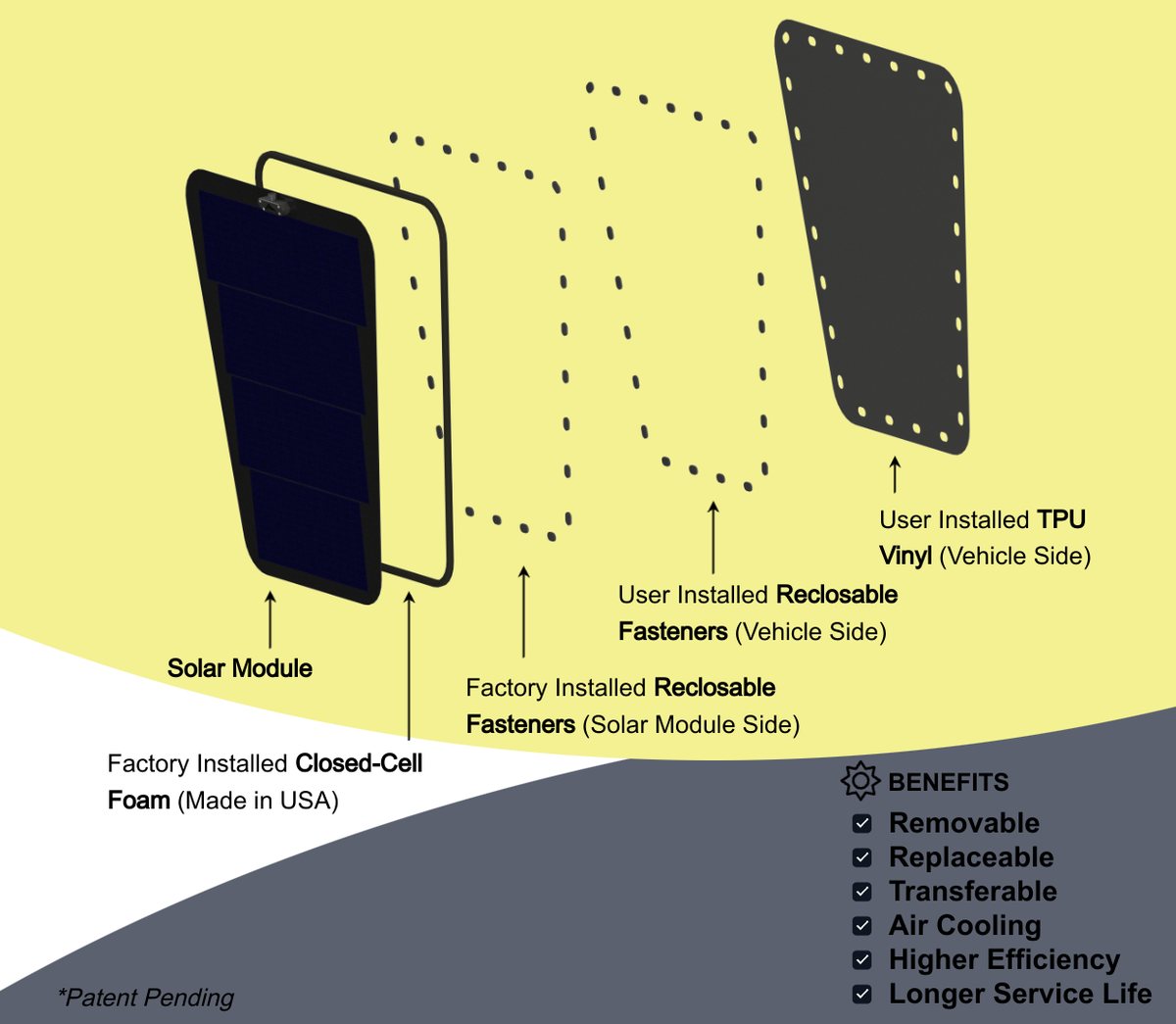
SolarClasp™ — a fastener instead of a bolt
The panel is held by fasteners whose mating half is bonded to the bodywork. A TPU film protects the bonded area so the paint is not working underneath.
Bodywork intact
No drilling, no riveting. What remains after removal is the film, and that comes off too.
Removal without tools
The panel is off in seconds — for the car wash, for winter, when selling the vehicle.
Preparation matters
The surface has to be degreased and kept at the temperature the instructions specify. This step is not optional.
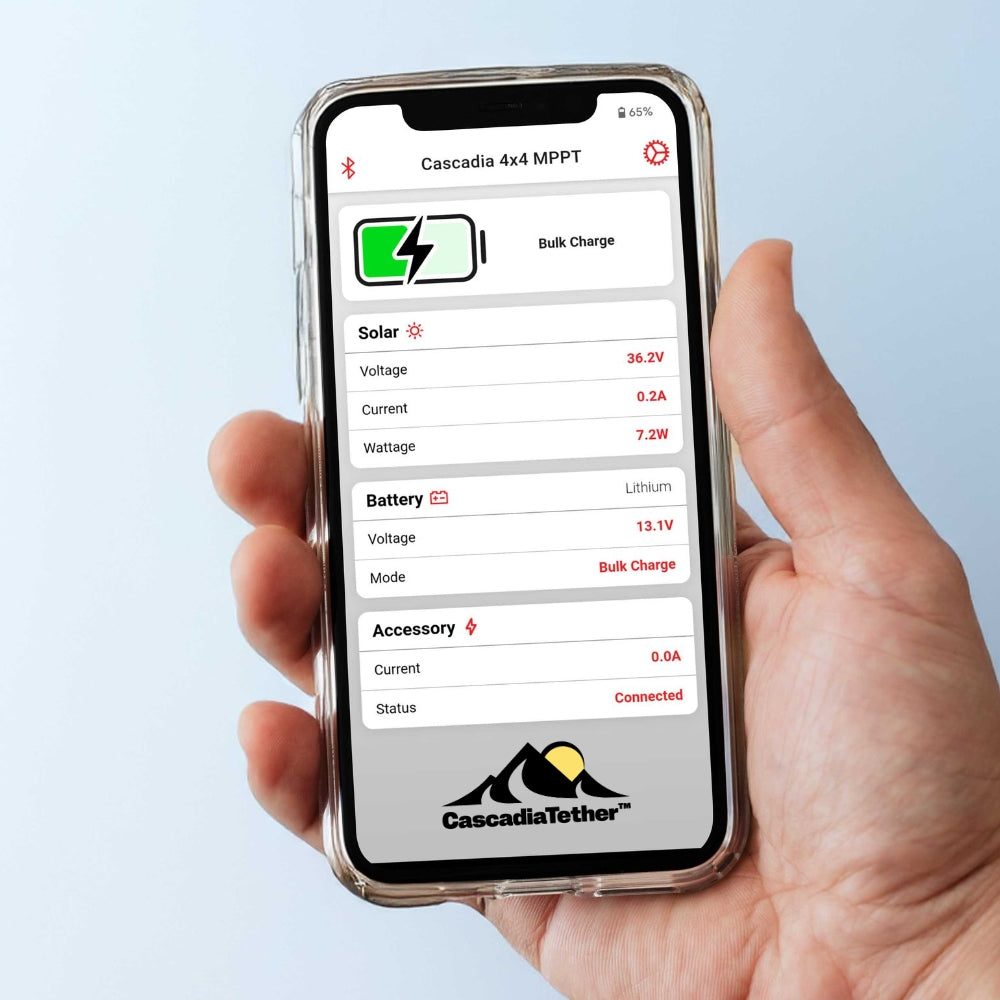
CascadiaTether™ — a line for when something goes wrong
A fastener can be opened by accident, or by someone who does not know what they are doing. The tether keeps the panel with the vehicle instead of leaving it on the road.
Second line of defence
It does not replace the fastener — it works when the fastener has failed.
Included
Part of the system, not a separately purchased extra.
The manufacturer does not state a maximum driving speed with the panel fitted, so we print no figure here. For unusual use, ask before buying.
Frequently asked questions
How does VSS System 2.0 differ from 1.0?
They are two generations of the system. 2.0 runs with the CHF149CC controller (15 A, Bluetooth), 1.0 with the CHF100CC (10 A, IP67). Accessories and cables are not interchangeable between them.
In the current catalogue only the CHF134CV kit for the Land Rover Defender is built on System 1.0.
Will the panel survive pressure washing?
The manufacturer designs the panel for outdoor use and states resistance to road conditions, but does not publish an ingress rating for the panel itself or a permitted washer pressure. We do not invent such values.
The CHF100CC controller has a stated IP67 rating. For the CHF149CC the manufacturer does not state one.
How many years will the panel last?
The manufacturer publishes neither a rated service life nor a power-degradation curve, so we print no number here. We state what is documented: a 2-year warranty on panels, extendable to 5, and 5 years on controllers.
A technical question?
If you are looking for a figure that is not on this page, it is because the manufacturer has not published it. Write to us — we will ask them rather than guess.